
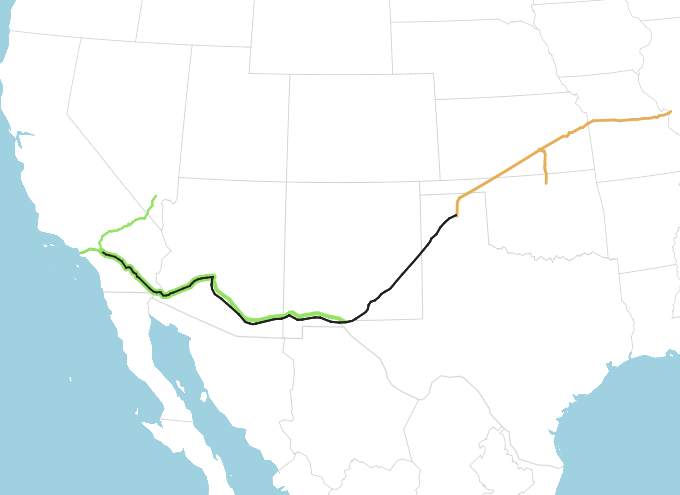
California is considering a major shift in its fuel supply system, and Nevada may feel the impact long before the pipeline is ever built. On November 26, 2025, the Los Angeles Times reported that Phillips 66 and Kinder Morgan are pursuing the Western Gateway Pipeline, which would transport gasoline, diesel, and jet fuel from the Midwest and Gulf Coast directly into California and other Western states. The project could be operational by 2029 if it secures regulatory approval.
The proposal emerges at a moment of vulnerability for the West Coast fuel market. Two significant California refineries, one in Wilmington and another in Benicia, are moving toward closure. Together, they represent close to one-fifth of California’s refining capacity. Experts interviewed by the LA Times noted that the state has become increasingly susceptible to price spikes due to outages, maintenance issues, and the shrinking number of refineries that can produce California’s specialized fuel blends.
Supporters of the pipeline argue that direct access to out-of-state fuel would lower the risk of shortages and allow product to reach California more quickly than shipping it by tanker. Energy analysts quoted in the Times said the project could deliver fuel within days rather than weeks, reducing the volatility that has defined California’s energy market for years.
The question for Nevada is whether this shift would stabilize our own fuel prices or reinforce our dependence on decisions made in Sacramento.
Nevada’s Longstanding Dependence on California Fuel
Nevada has no significant refining capacity and only limited petroleum production, which means the state relies heavily on California refineries to meet demand. Estimates suggest that nearly 90 percent of the gasoline and diesel used in Nevada originates in California. Southern Nevada is supplied primarily through the CALNEV Pipeline running from Los Angeles to Las Vegas, which also feeds McCarran International Airport and several military installations.
This heavy reliance has placed Nevada in a structurally vulnerable position. When California experiences refinery outages, environmental regulation shifts, seasonal blend changes, or transportation delays, Nevada typically experiences the effects within days. Price spikes in the Los Angeles spot market ripple through Nevada rapidly, often with no alternative supply source available.
Could the Pipeline Improve Nevada’s Fuel Stability?
Some potential benefits exist. The Western Gateway Pipeline could introduce a new stream of fuel into the Western market that is not tied to California’s shrinking refining base. More supply entering the system could ease the pressure on California refineries, which in turn may help Nevada avoid extreme price swings during outages or production disruptions.
If the pipeline succeeds in reducing California’s need for imported marine shipments, fuel could flow more consistently, with shorter travel times and potentially lower transportation costs. That could translate into marginally lower or more stable prices across the region.
However, these benefits are far from certain.
Risks and Uncertainties for Nevada
Even with a new pipeline, Nevada would remain deeply connected to California’s fuel landscape. California’s environmental regulations require a unique gasoline formulation produced by only a handful of refineries. Unless the pipeline’s incoming supply can be refined or blended to meet those standards, much of the fuel may not actually ease the bottleneck that drives prices higher in both states.
California’s gasoline market will always be prioritized before Nevada’s. If the pipeline delivers fuel into the California system during periods of high demand or constrained supply, distributors will focus on serving California first, with Nevada receiving whatever remains available. Nevada’s position as a downstream customer means the state could continue to see volatility even if total regional supply increases.
Additionally, California’s long-term policies continue to signal a transition away from traditional gasoline. The closure of refineries is driven in part by declining long-term demand projections and regulatory pressure. If demand declines faster than expected, the pipeline’s economics may shift, and the companies operating it may choose to route fuel elsewhere or scale down throughput. Any such decisions would again be made outside Nevada’s control.
Nevada’s Efforts to Reduce Its Vulnerability
Earlier this year, Nevada lawmakers advanced legislation directing the state to study options for diversifying fuel supply beyond California. The goal is to evaluate alternative sources, including increased shipments from the Gulf Coast or Rocky Mountain region, expanded storage reserves, or new pipeline infrastructure that would reduce the state’s exposure to California’s refinery market.
These efforts highlight a growing recognition that Nevada’s energy security is closely tied to external political and economic decisions. Whether the Western Gateway Pipeline is ultimately built or not, Nevada’s dependence on California will remain a strategic challenge unless the state pursues its own diversification initiatives.
What Californias Pipeline Means for Nevada
The Western Gateway Pipeline could offer Nevada modest benefits by adding supply redundancy and reducing the severity of some price spikes. But the state’s structural dependence on California would not disappear. Nevada will remain exposed to California’s regulatory priorities, its fuel blend requirements, and its evolving energy policy.
In the near term, the pipeline may help stabilize prices somewhat. Over the long term, its impact will depend on how California chooses to allocate the incoming supply, how quickly its refinery capacity continues to shrink, and whether Nevada invests in alternative delivery routes of its own.